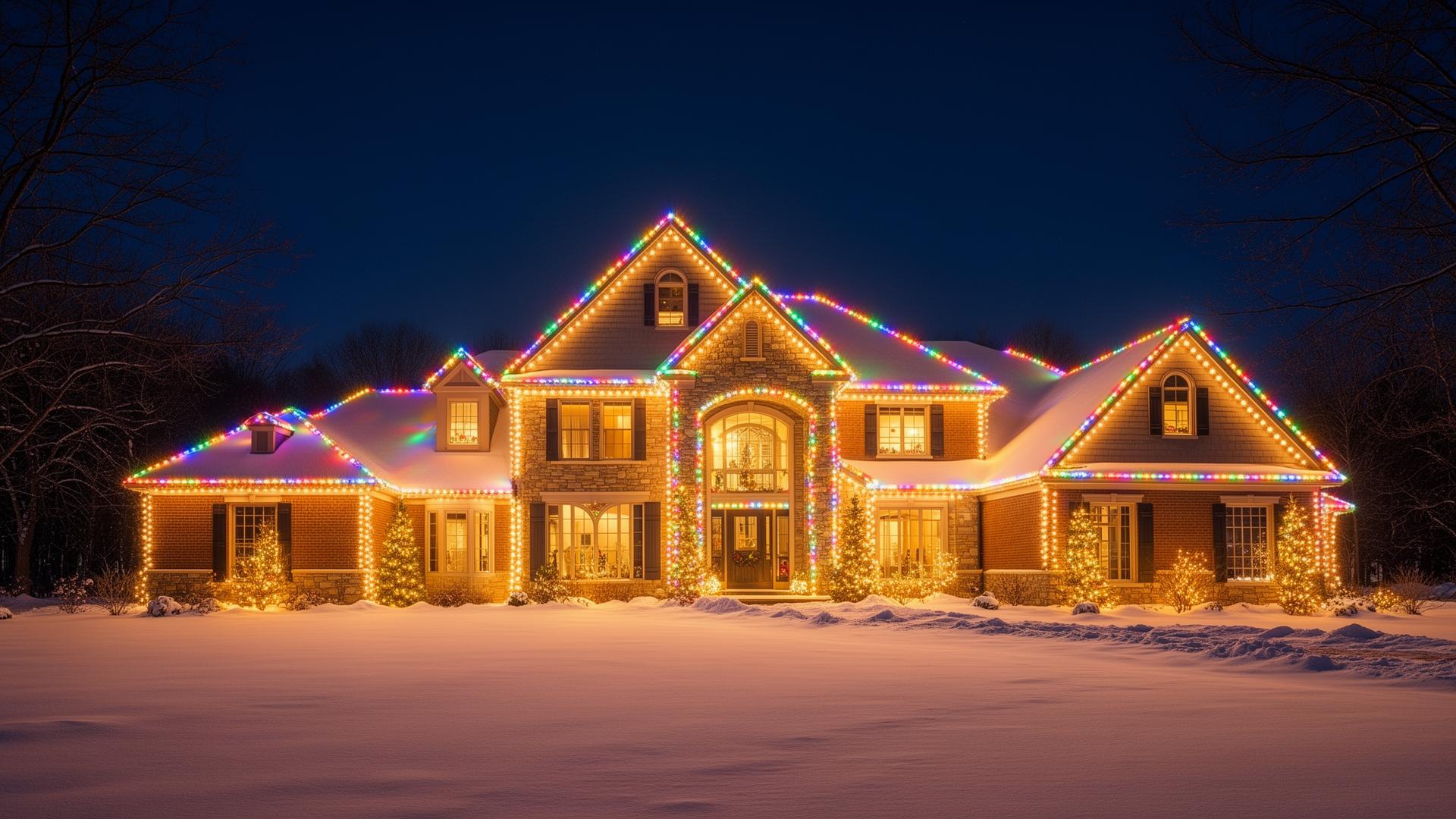
Every Denver Roofline Is a Different Problem
Foothills pitch, walkout height, historic trim, production-neighborhood sameness. Denver Lighting Partners designs residential lighting to the house in front of us, then installs, services, removes, and stores it.
- On-site walk before any number
- Licensed, bonded and insured in Colorado
- In-season service included
Request Received!
Thank you for reaching out. We'll follow up within one business day to discuss your project.
Six Kinds of Denver House, Six Different Jobs
The Denver metro is not architecturally uniform. It runs from 1920s brick bungalows near downtown, out through decades of suburban production building, and up into steep-pitch foothills properties with cedar and stone. Each of those demands something different from the crew. Here is how we think about yours.
Walkout and multi-level suburban
Highlands Ranch, Centennial, Castle Pines, Broomfield
A walkout lot means the back elevation is effectively a story taller than the front. Ladder work that looks routine from the street is a serious height problem in the rear. These homes need proper fall protection and, frequently, a lift on the downhill side. It is also the housing type where homeowners most often decide permanent channel is worth it, because the annual ladder exposure is the real cost.
Foothills and mountain-transition
Golden, Evergreen, Morrison, west Arvada
Steep pitches, cedar and stone exteriors, mature conifers, and long driveways with no easy truck access. Wind exposure is materially higher than on the plains, so fastener choice and cord routing matter more. Uplighting conifers reads much better here than trying to wrap them, and driveway markers do real work on a dark canyon approach.
Historic and mid-century close-in
Englewood, Littleton, Berkeley, Park Hill, Congress Park
Original trim, brick, and detail work that should not take a fastener. We work off gutters and existing edges rather than into the material, and design to the architecture rather than over it. Bungalows and Tudors get a different treatment than a modern build: tighter runs, warmer color temperature, and restraint.
New-build production neighborhoods
Aurora, Thornton, Parker, Erie, Commerce City
Consistent rooflines and predictable geometry make these efficient to install, and the HOA architectural standard is usually clear and documented. The design challenge is standing out on a street where every fourth house shares your elevation. Layering, uplighting, and color temperature choice do more here than adding more linear feet.
Estate and larger acreage
Cherry Hills Village, Greenwood Village, Sedalia, Franktown
Multiple structures, long approaches, detached garages, outbuildings, and landscape features spread across acreage. These are multi-day jobs with a real design phase. Power availability at the far edges of the property is usually the constraint that shapes the plan, and we map it before quoting rather than after.
Boulder and north corridor
Boulder, Louisville, Lafayette, Superior, Longmont
A mix of older in-town housing and newer development, with some of the most exacting local design sensibility in the region. Wind events coming down out of the canyons are a genuine engineering input here rather than a footnote, and we spec attachment accordingly.
Designing for a Winter You Can Actually See
Denver gets snow and then, frequently, gets a run of hard high-altitude sun that clears a dark roof within a day or two. Compared to markets with a persistent winter snowpack, that changes the design brief in a way most installers never think about.
It means your display is on view, against bare roof and bare branches, for most of the season. There is no forgiving blanket of white hiding uneven spacing, a visible downlead, or a cord run across the lawn. Finish quality is the whole product here.
It also means color temperature choice matters more. Against dry brown winter landscape and bare deciduous trees, a cool-white run can read stark and clinical. Warmer temperatures hold up better in a Front Range January than they do in a market where everything is reflecting off snow.
What that changes in practice
- Wire and downlead routing planned to be invisible from the street, not just tucked out of casual sight
- Warmer color temperature as the default, cool white only where the architecture calls for it
- Uplighting on conifers and aspens rather than trunk-wrapping species it does not suit
- Spacing set to the actual run length so the last section does not stretch or bunch
- Cord management planned around where snow will and will not melt off first
Where We Draw Lines
Four things we say out loud on the property walk, because finding out later is worse for both of us.
We will tell you no on timing
Once overnight lows sit consistently in the teens, asphalt shingles get brittle and clip work risks cracking them. If you call us in late December we may tell you the safe window has closed. That is a real answer, not a sales tactic.
Roof condition comes first
If your roof is storm-damaged or scheduled for replacement, we do the lighting after the roof, not before. Hail is common enough on the Front Range that we ask about this on every walk.
We do not fasten into historic material
On older close-in homes we work off gutters and existing edges. If a design would require putting a fastener into original trim or masonry, we redesign it.
Access shapes the quote
Gates, dogs, steep grades, and long approaches change crew time. We would rather see it in person and price it accurately than send a low number and revise it later.
Residential Questions
- Yes. Walkout elevations and steep foothills pitch are routine for us and they change the access and safety plan rather than the design. That is why every residential quote follows an on-site walk instead of a phone estimate.
- No. We use professional clips that grip shingles and gutters without nails, staples or screws. On stucco, brick or stone elevations we switch to substrate-appropriate attachment. Permanent LED channel uses a discreet bracket system designed to be invisible during the day.
- No, as long as we have access to exterior power and any gates are unlocked. Most Denver Metro homes are completed in a single afternoon. Larger estate properties may take a full day.
- A property walk, a written design and quote, all commercial-grade LED product and hardware supplied by us, the install itself, in-season service calls, takedown after the season, and storage of your system until the following season. You do not buy or store anything.
- No. Most residential installs are completed without the homeowner present. We confirm the design and the elevations in advance, and we send confirmation when the crew is clear of the property.
- We come out and fix it, included. Front Range windstorms are an expected part of the season here, which is why in-season service is bundled with every install rather than billed as a separate call.
- We install before the worst of the Colorado winter, typically mid-October through the first week of December. Our clip systems are rated for Colorado cold and do not damage shingles or contribute to ice buildup the way nails or staples do. If a weather event causes any issue mid-season, we come out and fix it. You should never be climbing onto a cold roof to deal with your lights.
- Book as early as you can. Our Denver Metro calendar fills from October into early December, and large properties need longer install windows. Commercial clients on annual contracts are scoped as one program per property with in-season service included.
- Three things. First, we work safely on roofs and ladders that should not be climbed in Colorado weather. Second, we use commercial-grade LED and channel systems that look better and last longer than anything sold at a big-box store. Third, we store your lights for you year over year so the same display goes back up every season with zero effort from you.
- Permanent lighting is a slim aluminum channel mounted along your roofline or soffit with individually addressable LED nodes inside. You control color, brightness, and patterns from an app. For Denver homes it is especially popular because Colorado homeowners want outdoor lighting for the full year -- not just December. You skip the ladder, the storage, and the seasonal install fee every year.
- Commercial work is a major part of what Denver Lighting Partners does. We handle office parks, retail centers, restaurants, hotels, HOAs, planned communities, and multi-tenant properties. We carry the right insurance and equipment for large facades, lift work, and after-hours scheduling so we do not disrupt your tenants or guests.
Get Your House Looked At Properly
On-site, free, and specific to your elevation and access. Serving the Denver Metro Area, the foothills, and the north corridor.