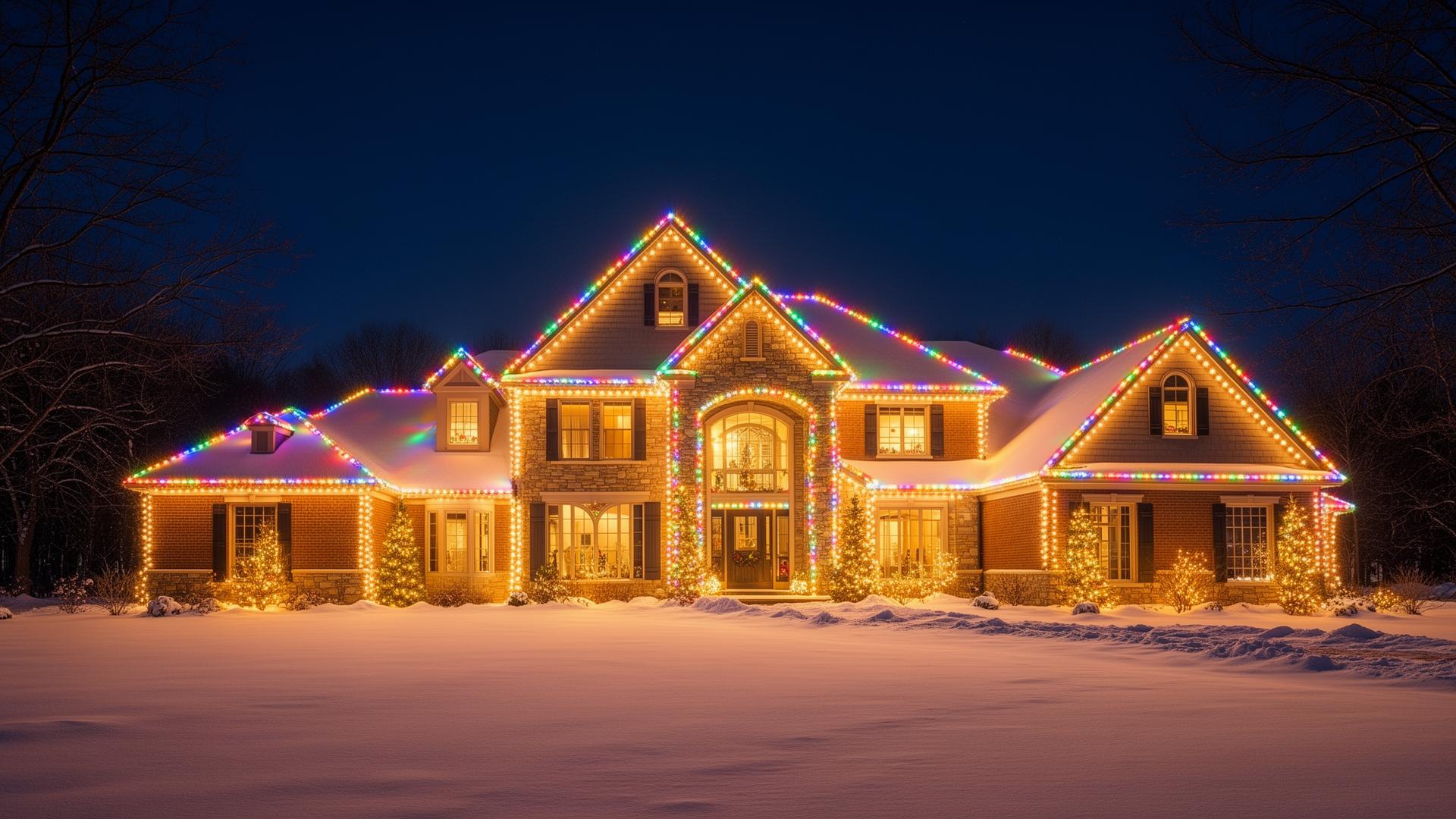
A Season, Not an Appointment
Design, materials, install, service through the whole season, takedown, and storage. Denver Lighting Partners owns the lights and owns the outcome across the Denver Metro Area.
- Commercial-grade LED, supplied by us
- Service calls included in season
- Climate-controlled off-season storage
Request Received!
Thank you for reaching out. We'll follow up within one business day to discuss your project.
The Denver Season, Month by Month
Seasonal lighting is a twelve-month relationship with roughly six weeks of installation inside it. Understanding where the real constraints sit is the fastest way to understand why we run the program the way we do.
August - September
Design and booking
We walk properties and lock the schedule. Commercial accounts on annual agreements already hold their dates from the prior year; new residential bookings fill in around them. Booking here is not urgency marketing, it is the practical consequence of a short install window in a market with early sunsets.
Mid-October - late November
The productive install window
This is when the work actually happens. Daytime temperatures are workable, shingles are still pliable, and there is enough daylight for a crew to finish an elevation properly. Most Denver metro residential jobs are a single day inside this window. Larger estate and multi-building commercial sites are scheduled across several.
Late November - early December
Window closing
We are still installing, but conditions get less predictable. A single storm followed by a hard overnight freeze can push a day. If you are calling us in this window, we will be straight with you about whether we can do it well or whether next season is the honest answer.
December - February
In-season service
Included, not billed. A section goes dark, a clip lets go in a wind event, a controller resets. You call, we come out. The entire point of hiring a crew is that nobody in your household is on a Colorado roof in January to fix a string of lights.
March - April
Takedown and storage
We pull everything once the freeze-thaw settles down, inspect it, and put it into climate-controlled storage under your account. Next October the same display comes back, or we redesign it if you want a change. You never store anything.
Why We Will Turn Down December Work
Every installer talks about "booking early." Very few explain the physical reasons behind it. Four of them, specifically.
Shingle brittleness
Asphalt shingles lose flexibility as temperature drops. A clip that seats cleanly at 45 degrees can crack a shingle at 15. This is the single biggest reason we hold a hard install window instead of taking work through December.
Wire jacket stiffness
PVC and rubber cable jackets stiffen in cold. Handling and bending stiff cable during install creates micro-cracks that become failure points in the middle of the season, weeks after anyone would connect it to the install.
Melt-refreeze on access surfaces
Denver afternoons melt surface snow; nights refreeze it. Ladder footings and roof edges that were fine at 2pm are genuinely hazardous at 8am. Crew scheduling has to account for that, not just the forecast high.
Shortened effective daylight
Sunset arrives early and the intense low-angle Front Range sun makes the final working hour difficult on west elevations. Practical crew daylight in late November is shorter than the sunrise-to-sunset number suggests.
The practical upshot: a job done inside the window lasts the season. A job forced outside it generates service calls, cracked shingles, and a display that looks tired by New Year. We would rather book you for next October.
We Supply the Lights, Which Changes the Incentives
You are not buying a box of product and a labor charge. We supply, own, install, maintain, remove, and store commercial-grade LED under your account. That structure matters more than it sounds.
When the installer owns the materials, cheap product is the installer's problem rather than the customer's. A strand that fails in the cold is our service call and our replacement cost. That aligns us with buying LED rated for the Front Range temperature range and installing it in a way that survives a full season.
It also means you own nothing that has to live in your garage. No bins, no untangling, no discovering in October that a third of last year's strands are dead.
Included in the program
- On-site walk, measurement, and written fixed quote
- Custom design for your elevations, not a stock package
- Commercial-grade LED supplied and owned by us
- Installation inside the safe Front Range window
- Service calls through the active season at no charge
- Spring takedown once freeze-thaw settles
- Climate-controlled storage under your account
- Optional design refresh each year
Seasonal or Permanent?
Seasonal is the right call if you want flexibility to change the look, if you would rather not have hardware mounted on the house year-round, or if a roof replacement is anywhere on your horizon. Given how often Front Range hail puts a roof into a claim cycle, that last point applies to more Denver metro homes than people expect.
Permanent channel makes more sense if you are paying a seasonal install fee every year on a property with difficult ladder access, or if you want exterior lighting available in months that have nothing to do with the holidays. Many of our permanent installs started as seasonal accounts and converted after a few years.
See the permanent system specLooking for a full rundown on what an install day looks like? See our expert outdoor lighting installation guide for Denver, CO.
Seasonal Program Questions
- We serve the full Denver Metro Area including Denver, Aurora, Lakewood, Englewood, Centennial, Highlands Ranch, Littleton, Arvada, Westminster, and Thornton. If you are outside these boundaries, call us. For larger projects we travel.
- We install before the worst of the Colorado winter, typically mid-October through the first week of December. Our clip systems are rated for Colorado cold and do not damage shingles or contribute to ice buildup the way nails or staples do. If a weather event causes any issue mid-season, we come out and fix it. You should never be climbing onto a cold roof to deal with your lights.
- Book as early as you can. Our Denver Metro calendar fills from October into early December, and large properties need longer install windows. Commercial clients on annual contracts are scoped as one program per property with in-season service included.
- Three things. First, we work safely on roofs and ladders that should not be climbed in Colorado weather. Second, we use commercial-grade LED and channel systems that look better and last longer than anything sold at a big-box store. Third, we store your lights for you year over year so the same display goes back up every season with zero effort from you.
- Permanent lighting is a slim aluminum channel mounted along your roofline or soffit with individually addressable LED nodes inside. You control color, brightness, and patterns from an app. For Denver homes it is especially popular because Colorado homeowners want outdoor lighting for the full year -- not just December. You skip the ladder, the storage, and the seasonal install fee every year.
Get on the Calendar Before the Window Closes
We walk the property, design to your elevations, and put a fixed number in writing. Serving the Denver Metro Area.