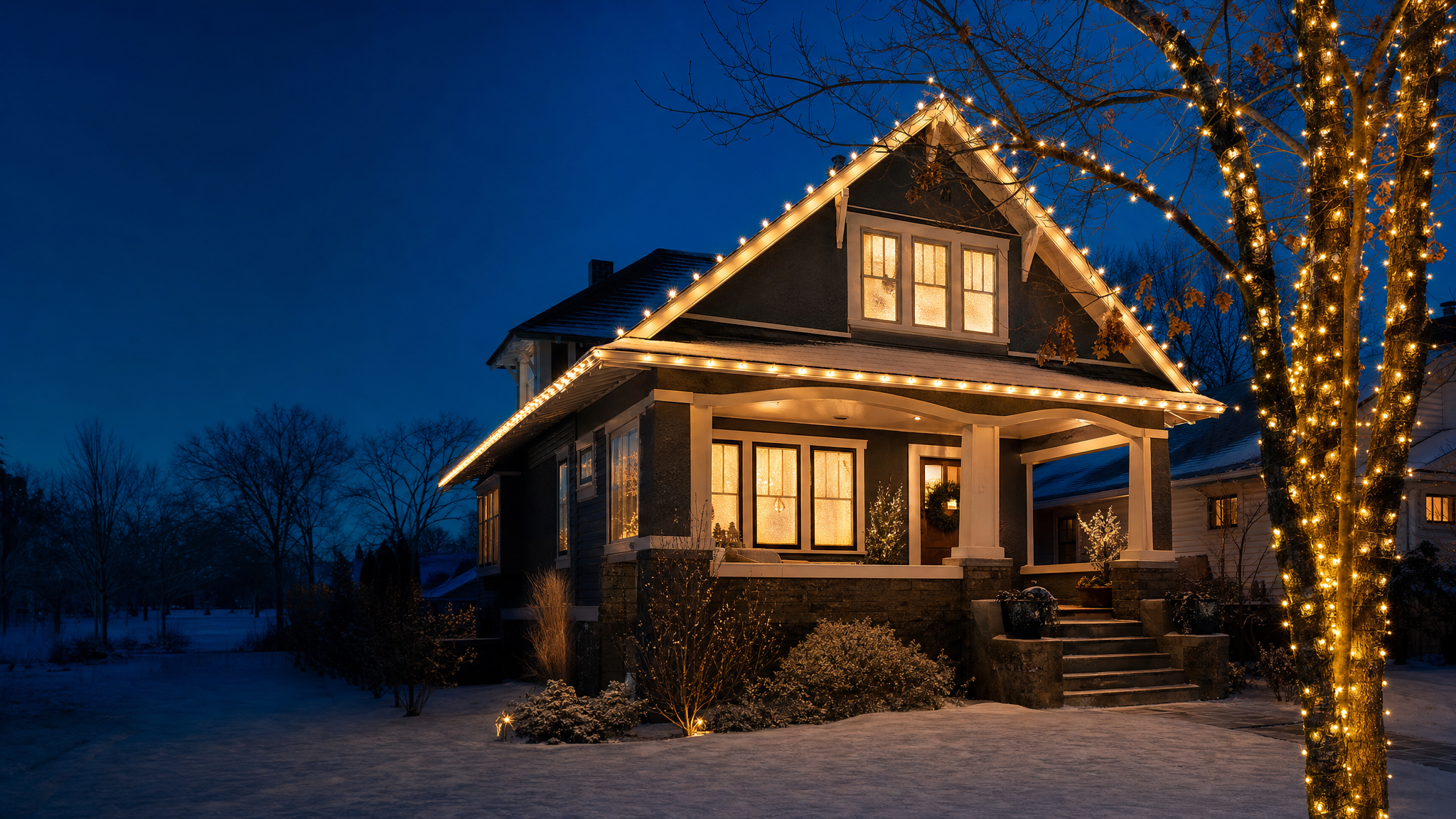
Yes, chinook and downslope winds can bring a holiday light strand down mid-season on the Front Range, because they keep every attachment point moving. A chinook can arrive as a warm, dry gust front and push wind across a roofline for hours, which is a different load than the steady cold most people plan for.
A strand that comes down after a windy afternoon rarely looks like storm damage. This post covers what the wind does to a lit roofline, where the failures start, and how the install changes when wind is the thing being designed for.
What does a chinook do to a lit roofline?
A chinook makes a light strand fail from movement, not from cold. It sets the strand flexing against its attachment point over and over through one afternoon, and every cycle works the clip a little further along the gutter lip or shingle edge until a section sags and a drop pulls free.
The failure usually shows up the next morning as one sagging section, then a longer one, until the run goes dark at the next connection.
Where do wind failures start?
Wind failures start at three transition points, not in the middle of a run: an outside corner where the line changes direction, the drop where the run leaves the roofline for a column or a tree, and the connector between two strands. Those points carry the load when wind pushes a line sideways.
A job that adds clips only along the straight runs has protected the part that was never at risk.
Which Denver Metro areas see the strongest wind?
Exposure is not uniform across the metro. The western edge, along the hogback and the foothill approaches through Morrison, Golden and the Jefferson County benches, takes the strongest downslope events, and the Palmer Divide through Douglas County sees its own accelerated wind. The flatter eastern and northern metro sees less of that sharp downslope effect.
The same lighting plan is not correct in all three. Our Morrison, Golden and Castle Rock pages describe how each one is handled.
How does the install change when wind is the design constraint?
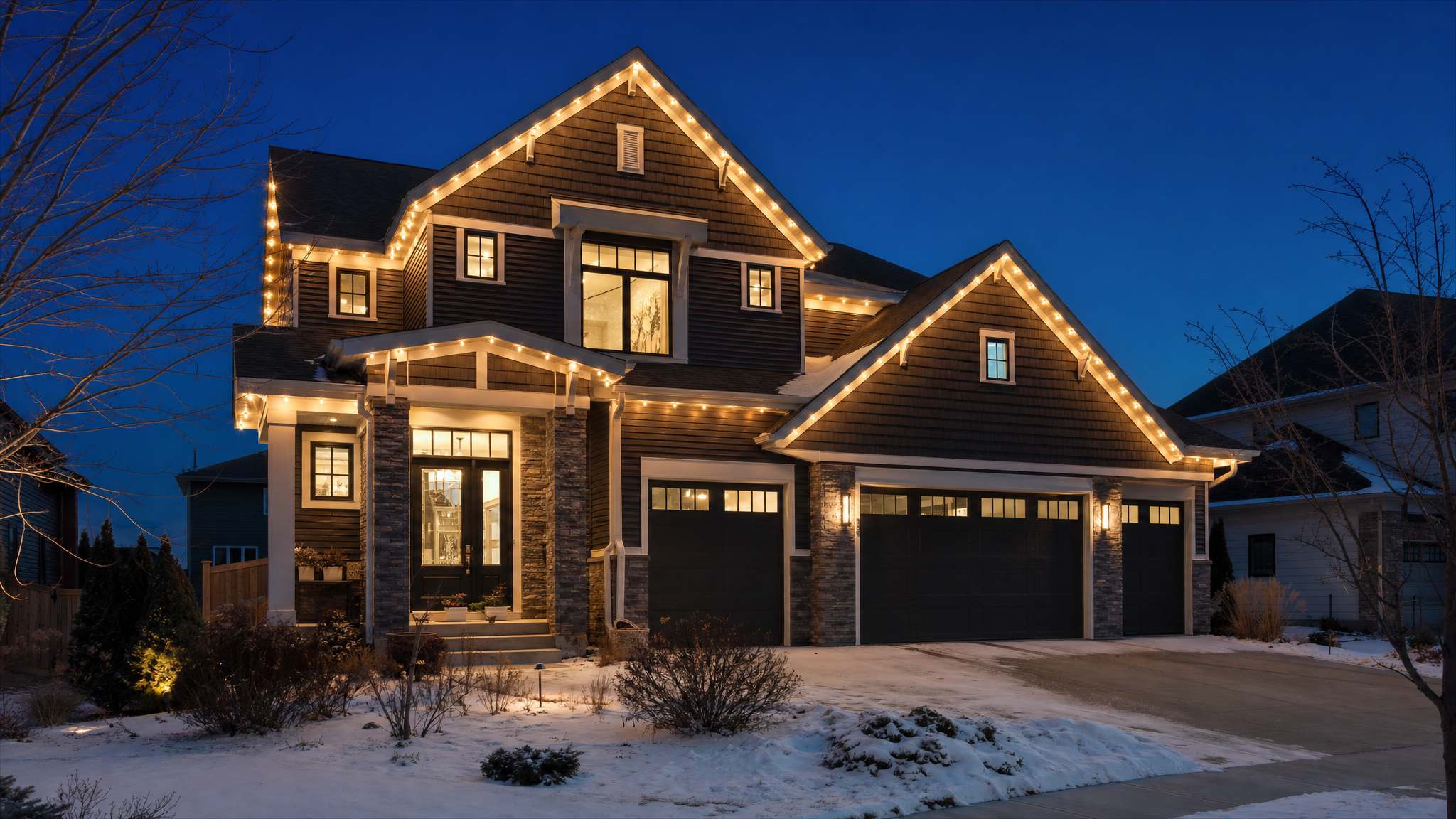
When wind is the constraint, attachment is specified to the exposure of each elevation instead of following one standard everywhere, and every clip is chosen for the surface it attaches to. A west-facing foothills roofline and a sheltered suburban one do not get the same attachment plan, even on the same style of house.
On eleven historic storefronts in downtown Englewood, we quoted and installed each facade individually and left no fastener damage on the original brickwork or trim. That is what attachment matched to the surface looks like in practice.
What should you do if wind already took part of your display down?
Stay off the roof and call instead of climbing. A roof after a chinook is a bad combination of conditions: the warm air that came with the wind has often melted and refrozen the north faces, and the wind frequently has not finished. If the lighting is on our full-season program, call us, because in-season service is part of that program.
Our holiday lighting page lists what the program covers.
Does permanent lighting solve the wind problem?
For the most part it does, because permanent LED channel is mechanically fastened into aluminum track along the fascia instead of hung from clips, and there is no strand free to flex. That removes the failure described above, which matters on the Front Range, where wind events are a regular part of the season.
On a 9,800 square foot estate in Cherry Hills Village, we tucked the channel into the soffit along the roofline, dormers and gables, so no part of the system hangs free in the wind. See permanent lighting for how the channel is mounted.
Frequently Asked Questions
Do chinook winds damage Christmas lights?
Yes, they can. A chinook drives repeated flexing at every attachment point for hours at a time, which works clips loose. The damage first shows up as a sagging section the next morning, not as obvious storm damage.
How do you wind-proof holiday lights in Colorado?
Specify the attachment to the exposure of each elevation, and match the clip to the surface it attaches to instead of defaulting to a shingle clip. Pay the most attention to corners, drops and connectors, because those are the points where wind failures start.
Should I repair wind-damaged lights myself?
No. A roof after a chinook typically combines refrozen melt on the shaded faces with wind that has not finished, which makes winter ladder work dangerous. If your lighting is on our full-season program, in-season service is part of it, so call instead of climbing.
Which parts of the Denver Metro see the strongest wind?
The western edge does. Properties along the hogback and the foothill approaches through Morrison, Golden and the Jefferson County benches take the strongest downslope events, and the Palmer Divide through Douglas County sees its own accelerated wind. The attachment plan differs by area for that reason.